
Pigmentation Treatment
Pigmentation Treatment
Cheongdam NB Clinic selects laser devices of different wavelengths by pigment type, treating freckles, melasma, solar lentigines and other concerns separately.
Overview of pigmentation treatment at Cheongdam NB Clinic
Cheongdam NB Clinic, located in Cheongdam-dong, Gangnam-gu, Seoul, classifies pigmentation concerns into types such as freckles, melasma, moles, solar lentigines and seborrheic keratosis, and then selects the treatment device.
Pigmentation concerns on the face, such as sunspots, blemishes, freckles and lentigines, are caused by many factors including genetics, hormonal changes, UV exposure and aging, and different types call for different treatments.
The clinic first makes a diagnosis based on the size, location and depth of the pigment, then draws up an individual treatment plan and uses combination treatment, so that even deep pigment can be removed safely and effectively.
The clinic's pigmentation treatment devices include a 1550nm + 1927nm dual-wavelength laser, SooDo GROUP's 755nm laser, picosecond laser and nanosecond laser, a Candela dual-wavelength laser, a multi-pulse toning device and a Classys multi-wavelength device.
Which device is used, and how many sessions, is determined after an in-person consultation with a physician, and results vary from person to person.


The five pigment types as classified by Cheongdam NB Clinic
Pigmentation concerns differ in cause and appearance. Cheongdam NB Clinic believes that an accurate diagnosis of the pigment type is the prerequisite for choosing the right treatment.
Freckles
Freckles are small brown spots that appear mainly on the face and darken after sun exposure. The spots are mostly 3mm or smaller (commonly 1-2mm), with irregular borders that are nonetheless clearly distinct from the surrounding skin. They are common in frequently sun-exposed areas such as the face, neck and backs of the hands.
Cause: genetic factors.
Treatment: Q-switched lasers, long-pulsed lasers and intense pulsed light are commonly used, and ablative lasers can also be used. For superficial pigment, in recent years the 755nm or 532nm wavelength is often used to make the pigmented area scab over, and the scab is then left to fall off.
Melasma
Melasma consists of brown or gray-brown patches that appear mainly on the face. It is more common in women and is worsened by aging, hormonal changes or strong UV exposure.
Cause: UV exposure, pregnancy, hormones.
Treatment: melasma can be classified as epidermal, dermal or mixed. Because melasma is a relatively sensitive type of pigment, repeated laser toning at the 1064nm or 755nm wavelength to break down melanin is more suitable than high-energy lasers. Microneedle RF can also be used to improve the environment of the basement membrane connecting the epidermis and dermis, so that the melasma gradually fades without causing hyperpigmentation.
Moles
Moles form from an overgrowth of melanocytes and can vary in color, such as brown, black or red, and in size. They are divided into congenital moles present at birth and acquired moles that appear as a person grows.
Treatment: moles can be removed with an ablative laser. Rushing to remove a mole all at once may leave a depressed scar, so treatment is generally done in one or several sessions depending on the size and depth of the mole.
Solar lentigines
Solar lentigines are flat, coin-shaped brown spots commonly found on the face, hands and arms. If left alone, they may gradually darken and may develop into seborrheic keratosis, so appropriate treatment is needed.
Cause: aging, UV exposure.
Treatment: lentigines that are flush with the skin, whether spots or patches, need to be distinguished from thin seborrheic keratosis. In solar lentigines, melanocytes proliferate downward toward the lower epidermis, whereas in seborrheic keratosis, keratinocytes proliferate upward toward the skin surface. For this reason, side effects such as hyperpigmentation and recurrence are relatively common in lentigo treatment. Ablative lasers and lasers at the 532nm, 755nm and 1064nm wavelengths can be used, but recurrence is relatively likely.
Seborrheic keratosis
Seborrheic keratosis, also known as seborrheic warts, is a benign skin growth formed by epidermal keratinocytes from middle age onward. The lesions are brown or black and wart-like, and are common in frequently sun-exposed areas such as the face, neck and backs of the hands.
Cause: sun exposure.
Treatment: for seborrheic keratosis that is raised above the skin as papules or plaques, an ablative laser is applied repeatedly until the epidermis separates easily from the dermis and the moist basal layer can be seen.
Who pigmentation treatment at Cheongdam NB Clinic is suitable for
Pigmentation treatment at Cheongdam NB Clinic is recommended in the following cases:
Freckles or melasma that have darkened or spread because of UV exposure
Post-inflammatory hyperpigmentation caused by acne, dermatitis or similar conditions
Solar lentigines appearing in sun-exposed areas with age
Melasma caused by hormonal changes such as pregnancy, childbirth or taking oral contraceptives
Congenital light brown spots on the face or body
Blue-gray or brown spot-like moles on the face


Pigmentation treatment devices at Cheongdam NB Clinic
Cheongdam NB Clinic selects a suitable laser treatment plan from the following devices according to the pigment type and skin condition.
1550nm + 1927nm dual-wavelength laser
This device at Cheongdam NB Clinic uses two wavelengths at the same time, a 1550nm erbium glass laser and a 1927nm thulium laser, acting from the epidermis to the deep dermis. It is used for a range of pigmentation concerns and to improve wrinkles, pores and scars.
The treatment mode can be chosen according to the skin condition, with both lasers used together. Damage to the skin surface is minor, and daily activities can usually resume right after treatment. We use it for pigmentation treatment, scar treatment and combination treatment.
SooDo GROUP picosecond laser
This device uses dual wavelengths of 532nm/1063nm with a pulse width of 300 picoseconds, shorter than earlier nanosecond lasers, and acts selectively on pigment while reducing thermal damage to surrounding tissue.
According to the clinic, its firing speed is about 1,000 times that of a nanosecond laser, breaking pigment particles into smaller, more uniform fragments that are then cleared through the body's lymphatic system.
Used with fractional handpieces in MLA and DOE modes, it can induce laser-induced optical breakdown (LIOB) in the dermis, promoting collagen production and helping the skin regenerate. It acts reliably down to the dermis and rarely causes side effects such as pain or hyperpigmentation. We use it for pigmentation treatment and for pores and scars.
SooDo GROUP nanosecond laser
This device's firing characteristics fall between those of a picosecond laser and a Q-switched Nd:YAG laser. We use it for melasma pigment that was previously hard to treat with a Q-switched Nd:YAG laser, and for laser toning.
Its uses include improving pigmentation, pores, fine lines, skin tone and elasticity. According to the clinic, skin damage is reduced to less than one tenth of that of earlier laser toning, and the downtime is shorter.
SooDo GROUP 755nm laser
This device is a 755nm alexandrite laser. Compared with the Nd:YAG laser, it has higher melanin absorption and acts selectively on pigmented lesions while reducing damage to other tissue.
It is a short-pulse nanosecond laser, and the clinic states that it suits Asian skin, in which melanin is more active.
Its three modes are refractory pigment and laser toning (2-10mm), skin rejuvenation (10mm), and toning and brightening (6mm). We use it to treat melasma and other pigmentation.
Candela dual-wavelength laser
This device uses two wavelengths, a 755nm alexandrite laser and a 1064nm Nd:YAG laser. It can be used for pigmentation concerns such as melasma, blemishes and seborrheic keratosis, and for vascular treatment; its indications also include facial and spider veins, diffuse redness, hair removal and wrinkle improvement.
The device has a built-in dynamic cooling device (DCD) gas cooling system that protects the skin surface, reduces heat and pain during treatment, and lowers the chance of hyperpigmentation after treatment, making the treatment safe and efficient. We use it for pigmentation treatment, lifting and hair removal.
Multi-pulse toning device
This device combines laser toning with high-intensity pulsed light, has 2 handpieces and can be used for a range of pigmented lesions.
Using micro multi-pulse technology that takes into account the thermal relaxation time of melanosomes, it splits the energy of 1 shot into 40 or more pulses, raising the skin temperature gradually so that it acts on pigmented lesions selectively and safely. We use it to treat melasma and blemishes.
Classys multi-wavelength device
This device can address pigmentation, elasticity, brightening and redness in a single treatment. It allows customized treatment with filters such as 420nm, 515-590nm and 640-800nm according to the type and depth of the lesion, and is also suitable for sensitive skin.
The device delivers light of even intensity in a short time, and its built-in cooling system safely protects the skin surface from damage.
With its dual-lamp design, it emits 2 or 7 pulses within 5/1000 of a second, allows precise control of energy and cooling temperature, has a high level of safety, and comes with a range of spot guides. We use it to improve wrinkles, pigmentation and elasticity.
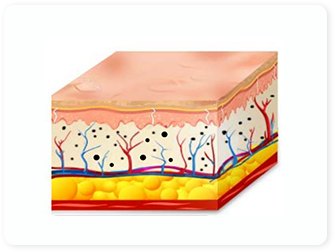
How the 1550nm + 1927nm dual-wavelength laser at Cheongdam NB Clinic works
The device fires in a fractional pattern, causing the melanin distributed in the basal layer to gather and fall off together with fine scabs.
Melanin distributed in the basal layer
Melanin is scattered throughout the basal layer of the skin.
Fractional firing
The laser is fired in a fractional pattern.

The uppermost layer of the epidermis is preserved
The uppermost layer of the epidermis is preserved while the rest is removed, and the stratum corneum provides a hemostatic effect.

Melanin gathers
The melanin scattered in the basal layer gathers at the sites where the laser was fired.

Fine scabs form
The melanin gathers at the treated sites and forms fine scabs.

Scabs fall off
As the scabs fall off, the corresponding pigmented lesions are treated.

Why choose Cheongdam NB Clinic for pigmentation treatment
Classified by pigment type
Cheongdam NB Clinic first distinguishes freckles, melasma, moles, solar lentigines and seborrheic keratosis, considers the size, location and depth of the pigment, and then selects the corresponding device.
A choice of wavelengths
The clinic's pigmentation treatment devices cover different wavelengths, including 755nm, 1064nm, 1550nm and 1927nm, and are generally chosen according to the pigment type.
The Medical Director's background in laser medicine
Medical Director Lee Hwang-hee is the founding president and honorary president of the Korean Association for Laser Dermatology and Trichology, which was founded in 2004.
Same location in Cheongdam-dong
Cheongdam NB Clinic has seen patients at the same location in Cheongdam-dong, Gangnam-gu since 2006, about a 5-minute walk from Cheongdam Station Exit 9, and visits are by appointment.

Clinic interior


Medical Team

Lee Hwang-heeMedical Director
VIEW MORERelated treatments
- Redness & Vascular TreatmentCheongdam NB Clinic distinguishes facial flushing from rosacea and treats facial redness with device treatment combined with daily care.
- Scar & Pore TreatmentCheongdam NB Clinic combines laser, medication delivery and dermal regeneration treatment according to scar type and pore condition.
- Medical SkincareCheongdam NB Clinic uses professional skincare devices to enhance results, reduce irritation, and provide ongoing care for sensitive skin and skin recovering from treatment.
Pigmentation Treatment FAQ
A.Cheongdam NB Clinic classifies pigmentation concerns into types such as freckles, melasma, moles, solar lentigines and seborrheic keratosis. The actual type is determined after an in-person consultation with a physician.
A.Daily activities can usually resume right after treatment with this device.
A.They are refractory pigment and laser toning (2-10mm), skin rejuvenation (10mm), and toning and brightening (6mm).
A.Yes. Melasma caused by hormonal changes such as pregnancy, childbirth or taking oral contraceptives is one of the conditions for which Cheongdam NB Clinic recommends pigmentation treatment. The specific treatment plan is determined after an in-person consultation.
A.The healing patch protects and moisturizes the area. Early on, when there is a lot of oozing, it needs to be changed; once the oozing stops, change it when it comes off naturally after about 2-3 days.
A.If the skin is exposed to UV after pigment laser treatment, hyperpigmentation may worsen. The color may also darken if post-inflammatory hyperpigmentation develops, or if melanin production is stimulated while the existing pigment is being cleared. In this case, protect the skin strictly from the sun and keep it moisturized. The pigment may fade naturally over time, but it is advisable to have a physician make a diagnosis and plan follow-up treatment.
A.Cheongdam NB Clinic advises first of all to avoid UV exposure and protect the skin from the sun. After laser treatment the skin is in an irritated state, so wash with lukewarm rather than hot water, avoid irritating products such as exfoliants, and focus on soothing and moisturizing.
A.At Cheongdam NB Clinic, a consultation usually takes about 10 minutes, and there is no extra fee for choosing a specific physician. Visits are by appointment, payment is by card or cash, and Chinese patients pay the same prices as Korean patients.
Updated on