
Non-Surgical Nose Contouring
A new approach to non-surgical nose contouring
Cheongdam NB Clinic combines three materials to improve the overall shape of the nose without incisions, for areas such as the nose bridge, tip, and alae.
Non-surgical nose contouring at Cheongdam NB Clinic
Non-surgical nose contouring is a procedure exclusive to Cheongdam NB Clinic, which regards it as a new approach to non-incision, non-surgical nose procedures.
There are several kinds of non-incision nose procedures. According to Cheongdam NB Clinic, non-surgical nose contouring is almost the only one among them that can improve the overall shape of the nose.
Non-surgical nose contouring was developed by Cheongdam NB Clinic from its own accumulated experience, addressing and improving on the shaping limitations of earlier nose procedures. The design can extend to the nose bridge, columella, and alae, and is customized to each person.
The procedure combines two threads, PDO mesh threads and PCL threads, with hyaluronic acid filler: the PDO mesh threads act as the pillar of the nose, the PCL threads handle the detailed design of the bridge, and the hyaluronic acid filler handles delicate refinement of the contour. Usually 16-18 threads are used in a procedure. The two kinds of threads are inserted in a crossing pattern, stimulating collagen production between them, which helps the nose shape stay stable over time. The nose tip is designed by the clinic's physicians using procedural technique, based on the triangular structure of the nasal tip tripod theory.
Treatment areas include the nose bridge, tip, and alae, as well as shape adjustment for upturned, short, and long noses. The specific amount of material and the design are determined after an in-person consultation, and results vary from person to person.


Cheongdam NB Clinic Non-Surgical Nose Contouring Key facts
- Treatment area
- Nose bridge, nose tip, alae, upturned nose, short nose, long nose
- Material
- PDO mesh threads, PCL threads, and hyaluronic acid filler
- Procedure time
- About 30 minutes
Who non-surgical nose contouring at Cheongdam NB Clinic is recommended for
Cheongdam NB Clinic suggests considering non-surgical nose contouring in the following cases.
Wanting to improve everything from bridge height to tip shape in one procedure
A short nose that needs lengthening or a long nose that needs shortening
Wanting a straight, well-defined nose shape through a simple procedure
Wanting to improve the nose shape but being reluctant about surgery
Wanting to revise the shape after a long-lasting nose filler injection
A nose shape that has become rounded and blunt after repeated filler injections
The three materials of non-surgical nose contouring at Cheongdam NB Clinic
Nose procedures that use threads and filler are not all done the same way. At Cheongdam NB Clinic, non-surgical nose contouring uses three materials, each with its own role, through an effective thread combination and procedural technique.
PDO mesh threads
Inserted crosswise with the PCL threads, they act as the pillar (support) of the nose and, by stimulating the body's own tissue formation, keep the nose natural with no foreign-body sensation; they also help hold the hyaluronic acid filler in place and reduce its spread.
PCL threads
Used for the detailed design of the nose bridge. The threads have strong barbs, high tension, and a firm hold, giving a more defined nose shape with no foreign-body sensation; nose length, height, and tip can all be designed flexibly, suiting many nose types.
Hyaluronic acid filler (HA)
Used for delicate refinement of the nose contour.

Comparison of non-surgical nose contouring and nose filler injection at Cheongdam NB Clinic
The table below compares the procedure time, duration, materials, and treatment areas of non-surgical nose contouring and nose filler injection at Cheongdam NB Clinic; actual results vary from person to person.
| Item | Non-surgical nose contouring | Nose filler injection |
|---|---|---|
| Procedure time | About 30 minutes | 10-20 minutes |
| Duration of results | Longer than earlier non-incision nose procedures | 6 months to 1 year |
| Material | PDO mesh threads, PCL threads, and hyaluronic acid filler | Filler chosen as appropriate |
| Treatment area | Nose bridge, nose tip, alae, upturned nose, short nose, long nose | Nose bridge |
Why choose Cheongdam NB Clinic for non-surgical nose contouring
Exclusive to the clinic
Non-surgical nose contouring is exclusive to Cheongdam NB Clinic and combines three materials to improve the overall shape of the nose.
Longer duration
Cheongdam NB Clinic explains that its duration is markedly longer than that of earlier non-incision nose procedures.
Correction of the nose tip and dorsal hump
The tip shape and dorsal hump, which earlier nose procedures found hard to address, can also be corrected with non-surgical nose contouring; suitability is determined after an in-person consultation.
Fine design and defined lines
The clinic designs based on the triangular structure of the nose tip, shapes the bridge with PCL threads, refines details with hyaluronic acid filler, and creates defined nose lines through the thread combination and procedural technique, unlike nose filler injections, which can spread and become blunt.
Shape can be revised and material removed if needed
The nose shape can also be revised in cases that were hard to revise after earlier nose filler injections or other nose procedures. If a problem arises, the inserted material can be removed.
Safe PCL threads
Non-surgical nose contouring at Cheongdam NB Clinic uses safe PCL threads to design the nose bridge.
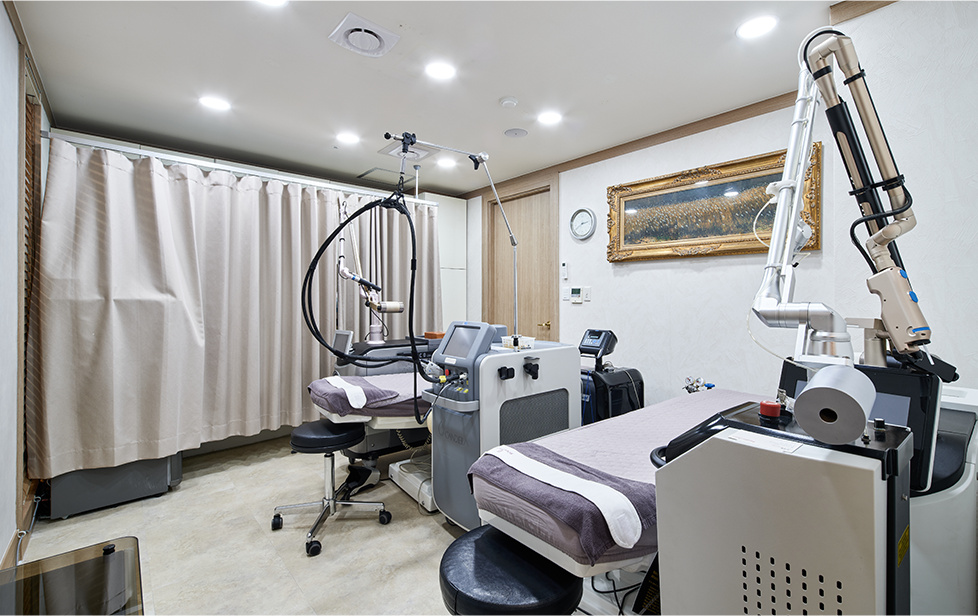
Clinic interior


Medical Team

Lee Hwang-heeMedical Director
VIEW MORERelated treatments
- Fillers & BotoxCheongdam NB Clinic uses fillers to restore volume in sunken areas and botulinum toxin to improve wrinkles and the lower-face contour, bringing out the beauty each person already has through harmonious design.
- Thread LiftingCheongdam NB Clinic selects a combination from 6 types of thread according to the sagging area and wrinkle type to improve loosened facial lines.
Non-Surgical Nose Contouring FAQ
A.Cheongdam NB Clinic uses three materials, PDO mesh threads, PCL threads, and hyaluronic acid filler, which respectively provide nose support, bridge design, and line refinement.
A.Non-surgical nose contouring at Cheongdam NB Clinic generally takes about 30 minutes.
A.Cheongdam NB Clinic explains that the duration is longer than that of earlier non-incision nose procedures. Unlike PDO threads, which dissolve relatively quickly, the PCL threads used stimulate collagen production themselves, so even as the threads break down naturally over time, the nose shape may remain better than before the procedure. The specific duration depends on individual nose conditions, varies from person to person, and is explained by the physician at the consultation.
A.The shape can be revised. The threads used in ordinary nose procedures dissolve quickly and are hard to remove; non-surgical nose contouring uses longer-lasting threads, and with the physician's procedural technique the inserted material can be removed if a problem arises after the procedure.
A.Yes. The threads are not placed in a shallow layer but inserted precisely through a single deeper layer, so if surgery is needed later the threads can be removed cleanly. Please confirm the specifics with the physician at the consultation.
A.Side effects such as bruising, swelling, and inflammation may occur after the procedure and vary from person to person. Please decide whether to proceed after a thorough discussion with the physician.
A.Yes, it can be considered. Cheongdam NB Clinic recommends non-surgical nose contouring for people who want to revise the shape after a long-lasting nose filler injection, or whose nose has become blunt after repeated filler injections. Suitability is determined after an in-person consultation.
A.Visits to Cheongdam NB Clinic in Gangnam-gu, Seoul are by appointment. A consultation usually takes about 10 minutes, there is no extra fee for choosing a specific physician, and Chinese patients pay the same prices as Korean patients.
Updated on